What is Revival?
We hear the word “Revival” thrown around a lot these days, but what really is revival?
Exploring Paradigms for Religious Revival
Looking into the study of revival history, there are various perspectives on religious revivals by both practioners and revival historians. For some, revival only happens within the church, and for others, it’s when the world is awakened to Christ as well. Some see revival as something that we should be living in every second of the day while others see it as episodic moves of God. Some see it coming as a result of prayer while others see it only as a sovereign act of God. While there could be a whole separate book on this subject alone, I present a small snapshot of a few of the varying perspectives below.
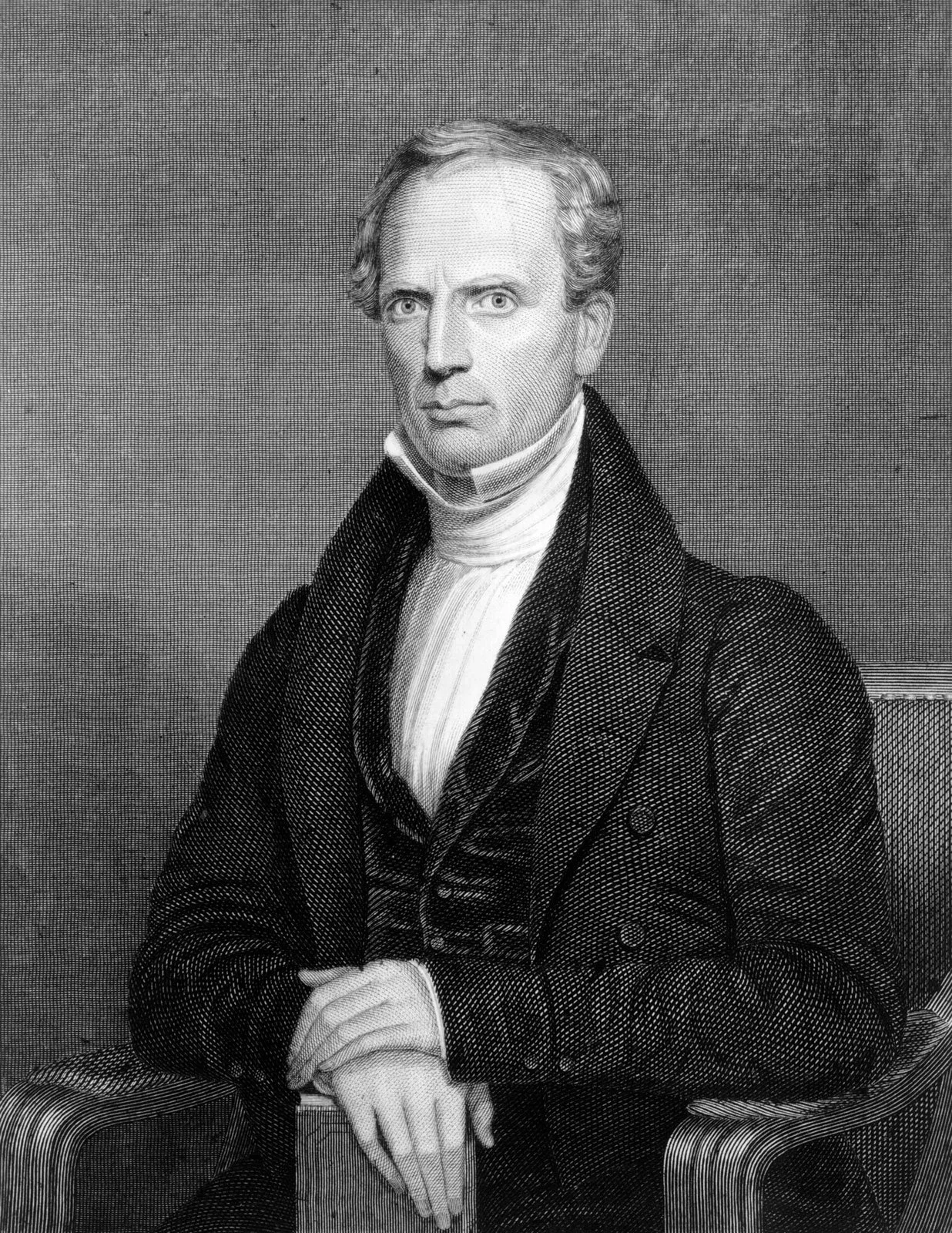
Charles G. Finney (1792-1875), known as the father of modern revivalism, believed that we very much play a role in awakening the church and bringing sinners to repentance as led by God. He saw a need for revival to happen periodically to wake up the church because it so regularly became stagnant. He saw revival as “nothing else than a new beginning of obedience to God.” He compared revival to a crop of wheat and emphasized that God uses means to cultivate both. Finney believed that if the fire was kept burning in the church, there would have been no need for revival, but unfortunately, he saw that was rarely the case. About revival, he wrote:
I AM TO SHOW WHAT A REVIVAL IS. It is the renewal of the first love of Christians, resulting in the awakening and conversion of sinners to God. In the popular sense, a revival of religion in a community is the arousing, quickening, and reclaiming of the more or less backslidden church and the more or less general awakening of all classes, and insuring attention to the claims of God.
It presupposes that the church is sunk down in a backslidden state, and a revival consists in the return of a church from her backslidings, and in the conversion of sinners.
Martin Lloyd-Jones described revival as “the outpouring of the Spirit over and above his usual, ordinary work; this amazing, unusual, extraordinary thing, which God in his sovereignty and infinite grace has done to the Church from time to time during the long centuries of her history.”
Christmas Evans (1766-1838), an influential one-eyed Welsh Baptist preacher said that “Revival is God bending down to the dying embers of a fire that is just about to go out, and breathing into it, until it bursts again into flame.”
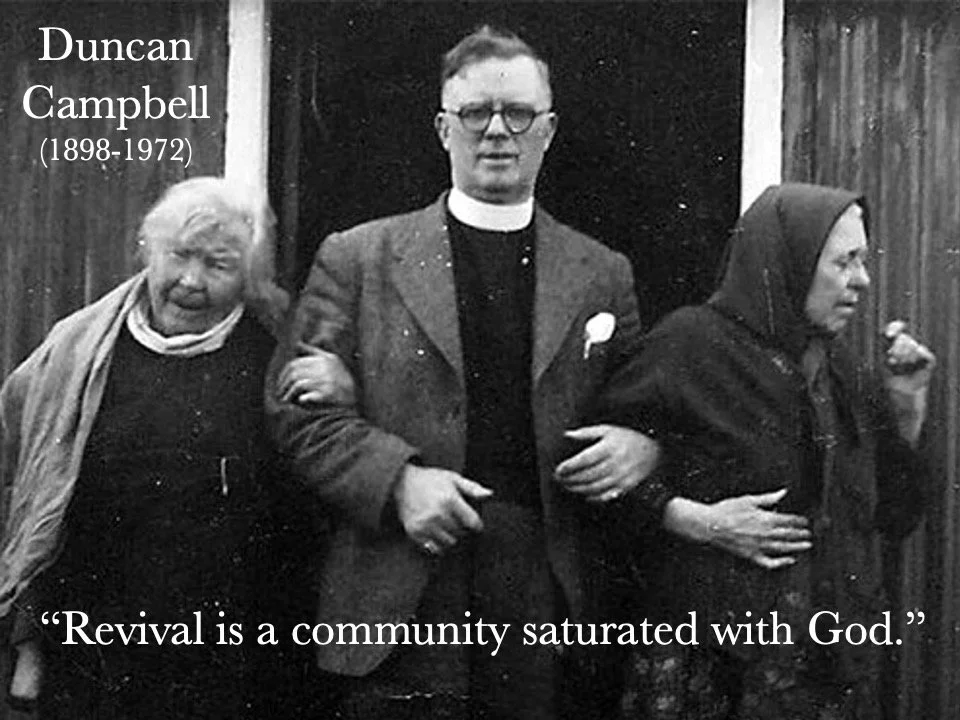
Duncan Campbell of the Hebrides Revival said that “Revival is a community saturated with God.”
In his study on Pentecostalism in The Everlasting Gospel, William Faulpel sees revival as having a seven-stage process: conception, gestation, labor, birth, growth, reproduction, and maturity. He compares it to the life cycle paralleling the birth of a new baby.
Mark Stibbe from the U.K. defines revival as “a season ordained by God in which the Holy Spirit awakens the Church to evangelise the lost, and the lost to their dire need of Jesus Christ.” He distinguishes renewal as confined to the Church while revival as something that reaches beyond the church and into the world. He likens renewal to a stream and revival to that same river becoming a “flood that disturbs boulders and overflows banks.”
Like Stibbe, I would also say there are special seasons, windows of opportunity, or kairos moments, where the Spirit is at work to awaken and revive the Church. At the turn of the twentieth century, revivals were springing up all around the world in this sacred and set apart kairos season of time. Revival broke out in Wales in 1904-05, in India in 1905, and then in Los Angeles in 1906 at Azusa Street amongst other worldwide moves near the same time. The early twentieth century was pregnant with revival. There was something anointed, set apart, and special about that kairos moment that these saints were able to recognize and tap into. The result was revival that is still impacting us over a hundred years later.
Defining Revival
As we seek to define revival here, I would say that revival is when the fire of first love for Jesus is re-ignited in the hearts of believers. As a result, their lives are transformed, and the kingdom of God is expanded all around them in various ways that impact, shape, and reform culture and society.
Revival is for Christians whose fire has waned. If someone has never encountered God’s love for themselves, they can’t necessarily be re-awakened to it. It is only when the fire of first love has been snuffed out that one needs revival. Once that original flame is re-ignited, the awakened ones naturally influence those around them, and many times others are brought to salvation as a result.
Jesus is Revival
All that said, at the heart of revival is Jesus. Jesus is the truest revival we will ever know. Beyond living for revival, we live for the Reviver. When we become awakened spiritually, we fall more in love with Jesus. When we fall more in love with Jesus, transformation takes place within our hearts, and we impact those around us. Revival is truly just more of Jesus.
We are born to live revived lives in the Spirit of God. We are made to be burning ones who don’t burn out. We are born to live loudly for our King of kings and display His glory through our lives. As we become awakened to King Jesus, our destinies begin to unfold in a greater measure. We step out in faith, hand in hand with our best friend Jesus, and can bring hope to a world that desperately needs it. From a place of intimate union with God, as we yield to and follow the Holy Spirit’s leading, we become agents of revival wherever we go. The burning flame inside spreads and ignites others whose flame has dwindled.
Ultimately, revival is becoming fully alive to Jesus again. And it’s important to understand that revival is not the end goal. It is only just the beginning.
*This excerpt is taken from a chapter in my book Sustain the Flame: Secrets to Living Saturated in God’s Presence and Holy Fire.